- Home
- Best Food Cities in Italy
12 Best Food Cities in Italy for Every Food Lover
This is our diary of the best food cities we’ve discovered across Italy, with recommendations on what and where to eat.
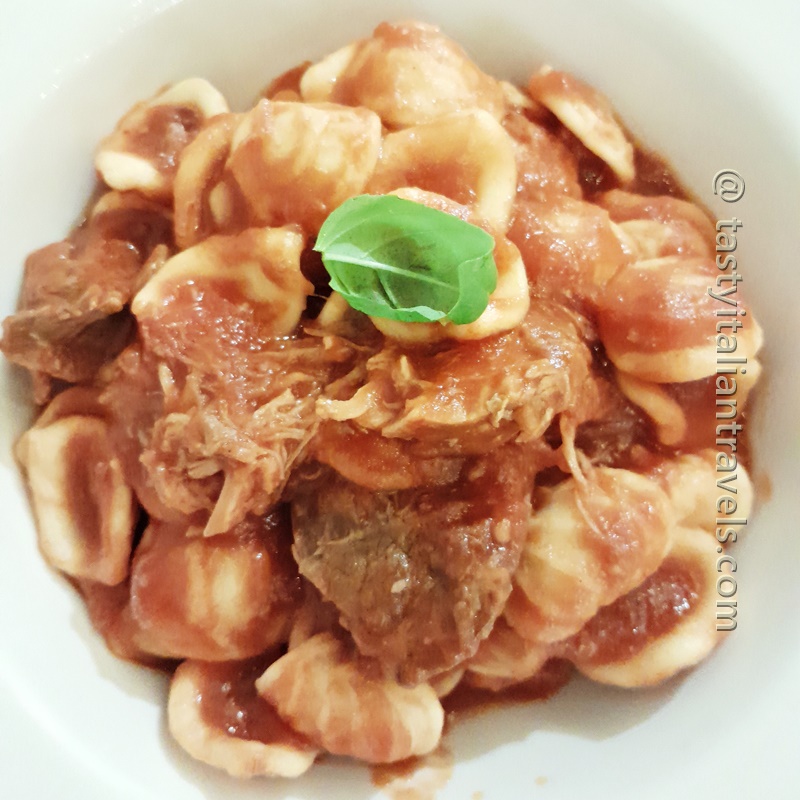 Orecchiette al ragù is a typical dish from Puglia region
Wondering which are the best food cities in Italy?
The truth is, you can’t go wrong.
Every corner of Italy has its own culinary treasures, regional specialties, and unforgettable dishes.
But if food is one of the main reasons you’re visiting Italy, some destinations stand out.
Here are 12 of the best food cities in Italy and what to eat in each one.
We love tasting our way through Italy and discovering authentic food experiences, from local restaurants to foodie tours and pasta- and pizza-making classes in Rome, Florence, Venice, and beyond.
We’re always exploring and adding new recommendations. Happy exploring—and buon appetito!
Skip to:
Rome | Florence | Bologna | Monopoli | Venice | Milan | Bergamo | Naples | Palermo | Siena | Genoa | Turin
1. Rome: One of Italy’s best cities for food
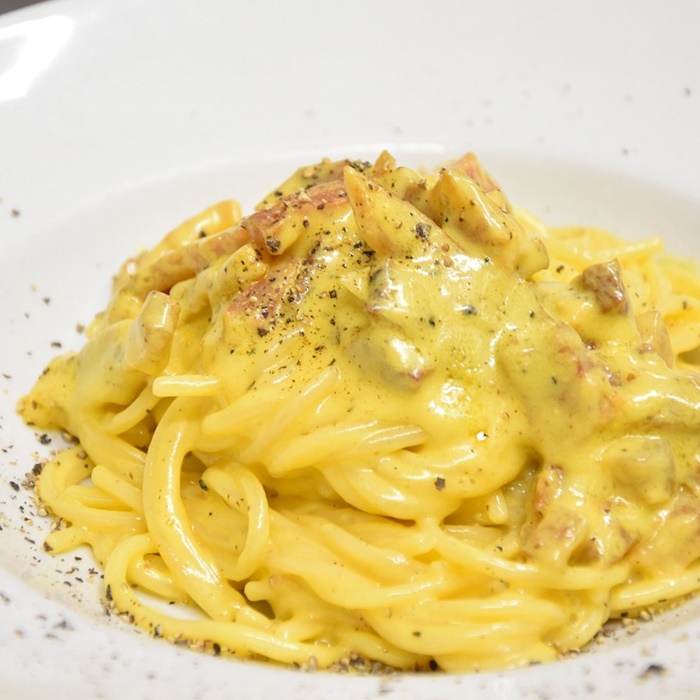
Rome is definitely one of the best cities for food in Italy. Roman cuisine, known as Cucina Romana, is simple yet varied and delicious.
We visit Rome regularly and make it a point to seek out places that locals genuinely love-from family-run trattorias and tiny, signless bakeries to hole-in-the-wall pizza joints,
On the menu, you'll find iconic pasta dishes such as carbonara, cacio e pepe, and amatriciana, to name a few.
Carbonara—made with eggs, pecorino, guanciale (cured pork jowl), and black pepper—is one of the most popular. We tried one of the best at Flavio al Velavevodetto in Testaccio, away from tourist crowds.
Want to learn how to make fresh pasta from scratch? We had a genuine hands-on experience at Chef Riccardo’s pasta workshop in Rome and highly recommend it.
When we’re craving something comforting but quick, we go for pizza bianca with mortadella—especially the one from Bonci Pizzarium, which is incredibly tasty.
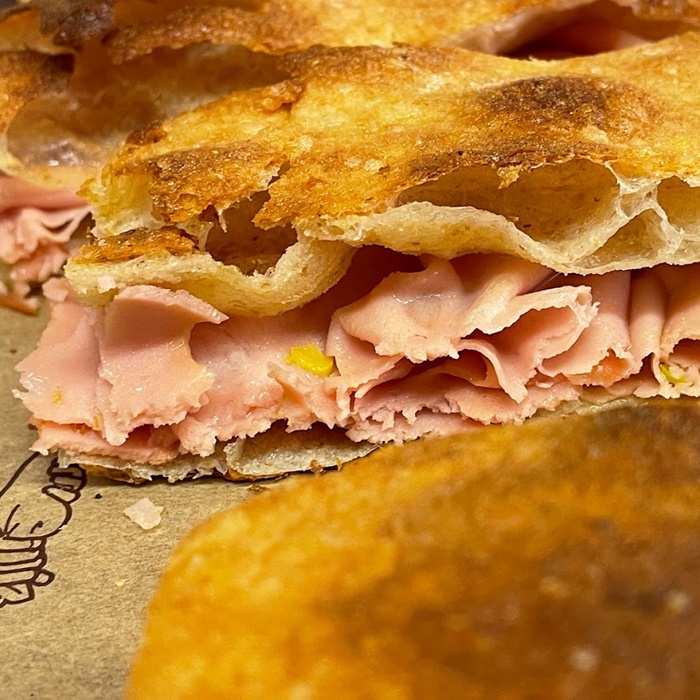 We never skip the chance to eat crunchy pizza bianca filled with fragrant mortadella
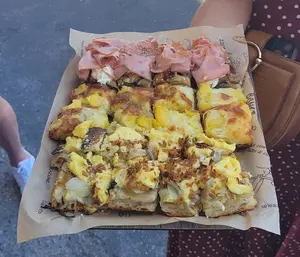
Besides pizza al taglio (Bonci Pizzarium has one of the best), which is rectangular pizza cut into slices, Romans also have pinsa. It’s made with a mix of flours and comes in small oval portions.
When we stayed in Prati, we loved getting pinse from Pinsa 'Mpò (Via dei Gracchi 7). They bake each pinse when you order, so it’s always fresh. Perfect as a quick snack or light lunch.
Porchetta (that originates from Ariccia), the boneless pork stuffed with herbs and seasonings and slowly roasted, is another delicacies, you shouldn't miss in Rome.
Grab ready-to-eat porchetta panini or made it by yourself (buy a slice of porchetta at Trionfale Market together with some freshly baked focaccia).
Supplì are a classic Roman street food, perfect for grabbing on the go as you explore the city. Their crispy exterior and gooey mozzarella center make them an irresistible snack found in pizzerias, bakeries, and tiny fritterie all over Rome.
One of the most traditional Roman meat dishes is saltimbocca alla Romana—pan-fried veal cutlets wrapped in prosciutto and flavoured with fresh sage.
Rome is also famous for offal dishes, such as trippa alla Romana, which you should try at least once.
Try these at Alla Rampa dei Gracchi (Via dei Gracchi 90), not far from the Vatican. The food quality is superb here and the service is top-notch. Many locals dine here, which is always a good sign.
Roman cuisine doesn’t lack vegetarian dishes. Just think of fiori di zucca fritti (zucchini flowers filled with ricotta and anchovies) or deep-fried artichokes—typical of the Jewish Ghetto—whose leaves are crisp and salty like potato chips while the heart remains tender.
Best sweets to try in Rome
Rome is a dream destination for food lovers—especially when it comes to desserts.
We especially love cornetti (Italian version of croissants), a goodies filled with creamy custard, pistachio spread, chocolate...
Pasticcerie all over Rome offer an incredible selection of pastries, mini tarts, cookies, and other traditional Italian sweets.
Choosing just one is nearly impossible. You should also try bomboloni, the soft and fluffy Italian doughnuts filled with cream, chocolate, or jam.
Although cannoli originate from Sicily and sfogliatelle from Campania, you can easily find them in Rome’s best pastry shops.
For an authentic Sicilian-style cannolo, we recommend I Dolci di Nonna Vincenza near Campo de’ Fiori, famous for its pastries, sweets, and savoury snacks.
Another iconic treat you can’t miss in Rome is the maritozzo, a sweet bun stuffed with whipped cream and traditionally enjoyed for breakfast.
And of course, no food trip to Italy is complete without gelato.
Our favourite gelato spots in Rome are Hedera Gelateria near the Vatican and Venchi near the Spanish Steps. Our top combo is chocolate and pistachio.
👉 See our guide to where to eat in Rome and discover our recommended Rome food tours.
2. Florence: Tuscan Comfort Food & Wine
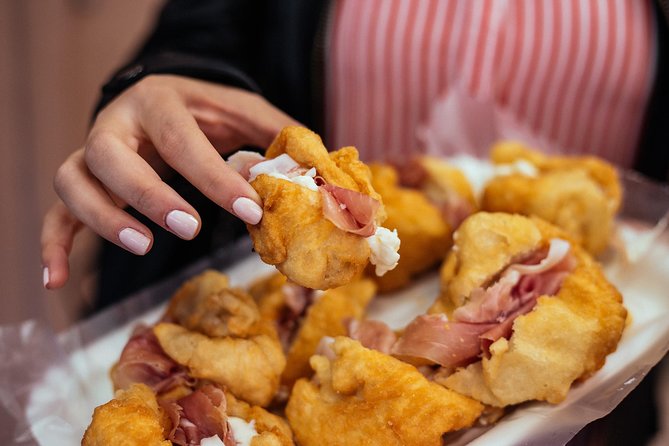
We can call ourselves insiders when it comes to Florence, as we visit regularly, and the food there is among the best in Italy.
Dishes are based on simple, home-grown ingredients cooked with care using old-fashioned recipes and it’s versatile.
Famous “poor” dishes include pappa al pomodoro, torta di ceci, panzanella, and crostini. Lampredotto sandwiches, made from cow stomach, are another local specialty that shows how every part of the animal is traditionally used — and they’re worth trying.
Be sure to visit the Mercato Centrale, Florence’s main indoor food market, located only a 10-minute walk from the main train station.
Inside, you’ll find stalls full of fresh fruits and vegetables, as well as local producers selling cheeses, salami, fresh pasta and gnocchi, schiacciata sandwiches and panini, plus fresh meat and fish.
We love buying a ready-made schiacciata sandwich here — usually filled with salami and costing only €6–7 — or some fresh gnocchi to toss with pesto for a tasty meal back at our Casa di Chiara apartment, our Florence base.
Nearby, we discovered a small bakery called Forno Canapa, where we often grabbed coccoli (fried dough balls) for a quick snack during the day.
Wine lovers will be happy too, with plenty of excellent local wines to choose from.
If you’re after something hearty, try a large bistecca alla Fiorentina, and afterwards, take a walk by the river with a homemade gelato in hand — the perfect way to enjoy Tuscan food culture.
This famous T-bone steak, traditionally made with Chianina beef, is often served with cannellini beans, another Tuscan staple. Robust Chianti reds pair perfectly with plates of pappardelle in wild boar sauce.
Set aside time for a relaxed lunch or dinner at a traditional trattoria and try these Florentine specialties the local way.
If you’d rather skip the search for the best places to eat in Florence, join a guided food tour to discover some of the city’s tastiest spots.
You can also take a cooking class and learn the art of fresh pasta making from local chefs.
For a sweet treat, gelato is always a great choice (did you know it was invented in Florence?).
Our favorite gelaterias are Gelateria La Carraia, near Ponte alla Carraia, which serves amazing gelato at more affordable prices than many other places in the city, and Strega Nocciola, located across the river from the Uffizi Gallery.
They store their gelato in covered metal containers — always a good sign of authentic gelato.
You can also stop by Venchi if you find yourself near Piazza della Signoria — their rich chocolate flavors are especially good, and you can also buy an amazing selection of chocolates there.
Florence is also an ideal place for edible souvenirs, and they don’t have to be expensive.
We love picking up several packs of cantucci or brutti ma buoni from Leonardo Firenze, or a jar of pistachio pesto from a local food shop — creamy, crunchy, and absolutely delicious.
And if you happen to visit Florence on a rainy day, spend your time in local trattorias and pasticcerias — definitely not a waste of time.
👍 Top 3 Activities for Food Lovers in Florence
3. From mortadella to tortellini: Bologna's edible excellence
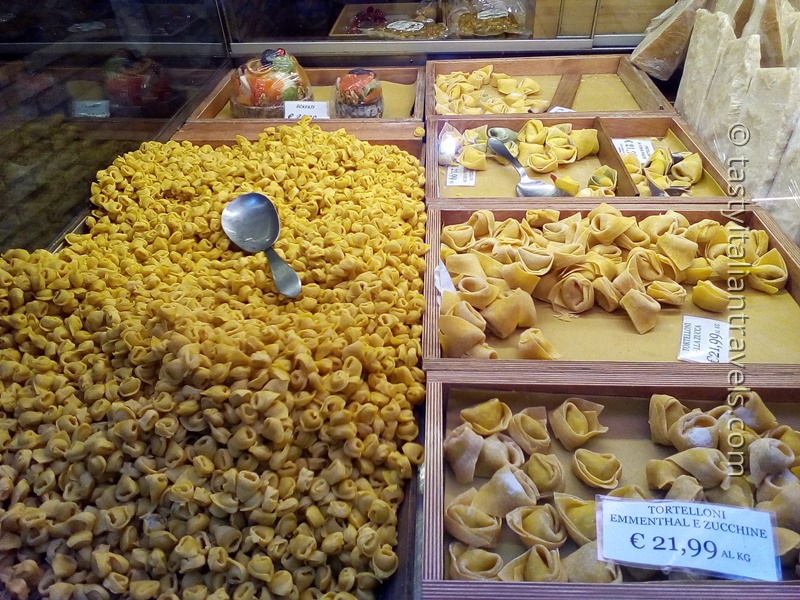
We vote for Bologna as one of the top three food cities in Italy, as we are avid pasta lovers—and Bologna is our favourite place to go (we love to stay at Savhotel Bologna).
Think of plates of tagliatelle (flat ribbons of pasta) tossed in rich meat ragù, tortellini (those little belly-button-shaped pasta) in broth, or lasagne verde (green lasagna sheets with ragù).
When we first stepped into the streets of Bologna’s historic centre, we knew we were in food heaven.
Bunches of yellowish tortellini and reddish prosciutto immediately caught our attention in the shop windows.
We spent part of midday near Sfoglia Rina, a place known for serving amazing fresh handmade pasta on the spot. Despite the long line, we waited and had an incredible plate of tortellini—it was worth it.
The sfogline (women who make pasta) prepare fresh pasta here, and you can also buy it to take home and cook yourself.
In addition to pasta, Emilia-Romagna—whose capital is Bologna—is home to producers of Parmigiano Reggiano, prosciutto, balsamic vinegar, and many other products of the highest quality.
Many dairies and farms are open for tastings and culinary tours, letting visitors see what goes on behind the scenes.
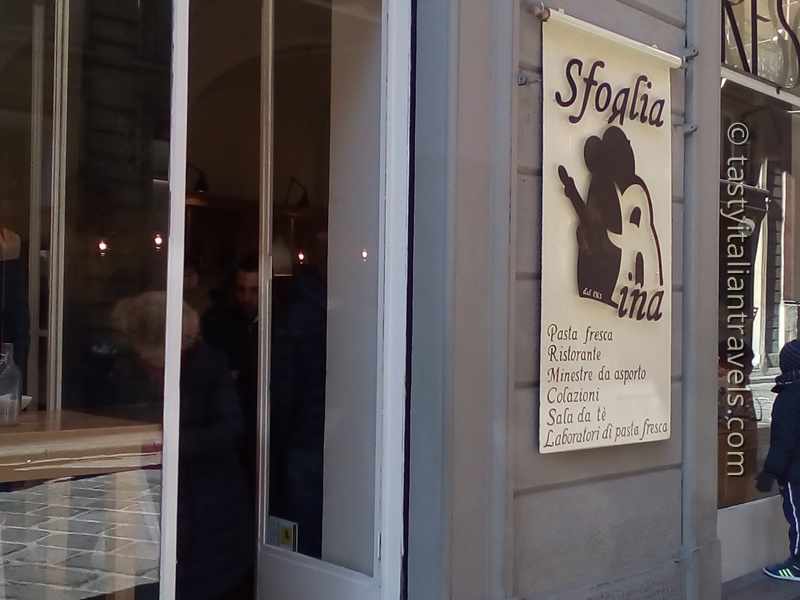 Sfoglia Rina is one of the best places to try delicious pasta dishes in Bologna
Delicious Bolognese cuisine - what to try
- Tagliatelle al ragù – a rich, slow-cooked meat sauce served with fresh tagliatelle pasta; a truly sumptuous plate
- Lasagne verde – green pasta sheets layered with ragù and béchamel sauce
- Tortellini in brodo – delicate “belly button” pasta served in a warm, comforting broth
- Tigelle – small bread rounds filled with cured meats and cheeses
- Cotoletta alla Bolognese – breaded veal cutlet topped with prosciutto and Parmigiano, finished with butter and broth
- Passatelli in brodo – meat broth filled with soft dumplings made from cheese, breadcrumbs, and eggs
- Gramigna al sugo di salsiccia – curly-shaped pasta served with a flavorful sausage ragù made with pork, tomatoes, and wine
- 👉 Want to try a bit of everything in one go? Join a guided food tour—you’ll leave full and happy!
While staying in Bologna, make a train trips to wonderful little cities such as Parma (Parmigiano Reggiano, Prosciutto di Parma, Culatello), Modena (do a Balsamic Vinegar tour) or Ferrara (try cappellacci alla zucca and salama de sugo).
We'd also recommend heading a little off the beaten track to visit the cities like Ravenna, Ferrara, Piacenza and Cesena for equally fabulous food in a quieter and more authentic setting.
Did you know that you can visit Bologna by fast train from Florence in only 40 minutes?
4. Monopoli: the southern Italy foodie gem
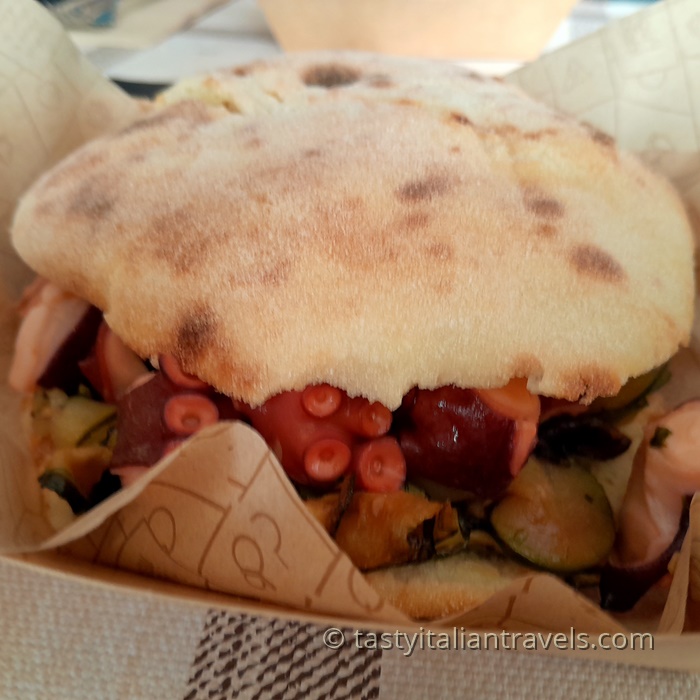 The puccia from Cala & Fuci in Monopoli was a generous and delicious meal for us
The first thing we discovered about Monopoli was that we would eat great seafood here (by the fishing boats in the harbour) and taste extra-virgin olive oil (after seeing countless olive trees while arriving by train from Bari; a 30-minute flight from Dubrovnik in Croatia).
We loved eating at Al Vicoletto (Via Orazio Comes 56), which offers delicious local food. We tried fritto misto di mare and cavatelli with mussels — both yummy.
We also sampled spaghetti all’assassina (very spicy) and orecchiette al ragù (melt-in-your-mouth good).
The real discovery was puccia! A typical Apulian flatbread. We found the best one at the Cala & Fuci Street Food Gourmet (on Via Roma, one of the main streets), where we had the one with grilled octopus and zucchini. It was huge, enough for a full meal, and not too expensive (€9).
We also took the opportunity to buy some salami and prosciutto from Che Buono di Tota Anna – a local food store. They always slice everything very thinly, and you can also buy amazing panini there.
You need to wait a bit for them to make the panzerotti at Madia, but it’s worth it. You’ll get a freshly fried dough pocket filled with anything you like for only €4–5. We loved the ones filled with mortadella and pistachio grains the most.
The pasticciotti from Martinucci (only 5-minute walk from Casa Mia) were heavenly, available in various flavours. We loved them all, but our favourites were the pistachio ones and the lemon-cream ones topped with almond flakes.
The food here feels as fresh as the breeze — honest, unfussy, and full of southern warmth. Monopoli may be small, but it’s proof that some of Italy’s best food cities are found off the beaten path.
The best Puglian souvenirs we found at La Finestra Sul Mare shop — Zio Pasquale taralli and extra-virgin olive oil.
We think Monopoli is definitely one of South Italy’s top food cities.
5. Venice: Seafood, Cicchetti & More
Venice may be famous for its canals and historic architecture, but it’s also one of Italy’s most exciting food cities.
Thanks to centuries of maritime trade, Venetian cuisine blends traditional Italian flavors with unique coastal and seafood influences. The best way to experience it is by wandering the narrow streets and hopping between "bacari" (traditional wine bars) for "cicchetti", Venice’s version of tapas.
What makes Venice special is how much of its food culture is built around simple, high-quality ingredients—fresh seafood, rich butter and olive oil, and bold local flavors.
The city’s markets and family-run osterie still keep the traditions alive, making it a perfect destination for anyone who loves authentic Italian food.
What to try in Venice:
- Cicchetti: Small bites served in bacari — must-tries include "baccalà mantecato" (creamy salt cod), "sarde in saor" (sweet-and-sour sardines), and "polpette" (meatballs).
- Risotto al nero di seppia: A striking black squid ink risotto, rich and intensely flavorful.
- Bigoli in salsa: Thick spaghetti-like pasta with a savory anchovy and onion sauce.
- Fegato alla veneziana: Venetian-style liver cooked with onions and served with polenta.
- Granseola: A Venetian crab dish often enjoyed in winter, especially in the lagoon areas.
- Cicchetti desserts: End your meal with a "baicoli" cookie or a slice of "tiramisu", which many believe originated in the Veneto region.
👉 Insider tip: Skip the main tourist streets and head to neighbourhoods like Cannaregio, Dorsoduro, or Castello for the most authentic and affordable eats. Venice’s food scene is all about small discoveries—one bite at a time.
6. Milan: Risotto, Osso Buco, Cotoletta & Panettone
Milan deserves a place on the list of the best food destinations in Italy.
It's famous for risotto alla Milanese (with saffron) or the heartier osso bucco, which is a dish of slow-cooked veal shanks. In Milan you can enjoy "aperitivo hour" - where for the price of a drink, you can help yourself to an astonishing number of free buffet snacks.
Did you know that panettone is invented in Milan?
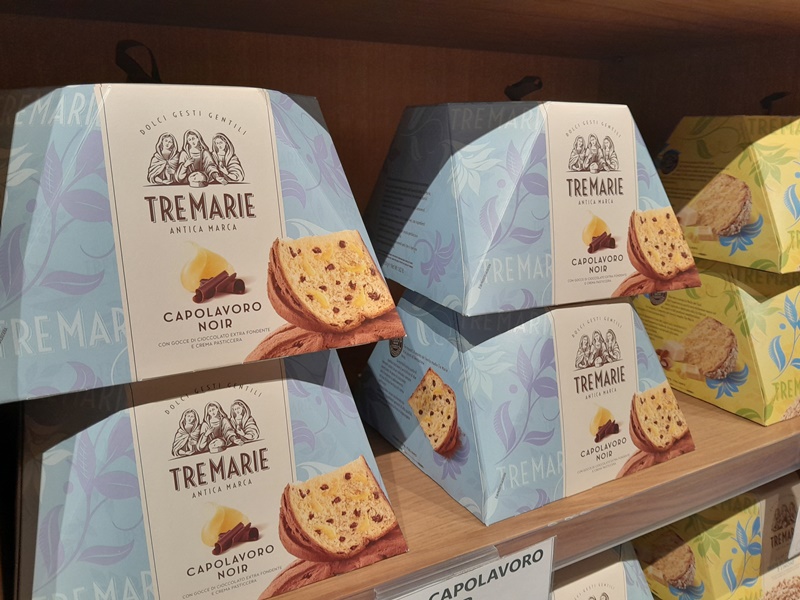
So be sure to visit one of artisanal producers and get this soft sweet bread Italian eat and give each other during Christmas time. You'll have a slice of delicious panettone from Tre Marie along a cup of coffee. They offer various flavours, and are very affordable (750g for 18 Euros).
Tre Marie store can be found in San Babila, which is a short walk from the Duomo. We love their panettone with almond paste and lemon, topped with sweet crunchy topping!
7. Bergamo's culinary treasures: From casoncelli to polenta e osei
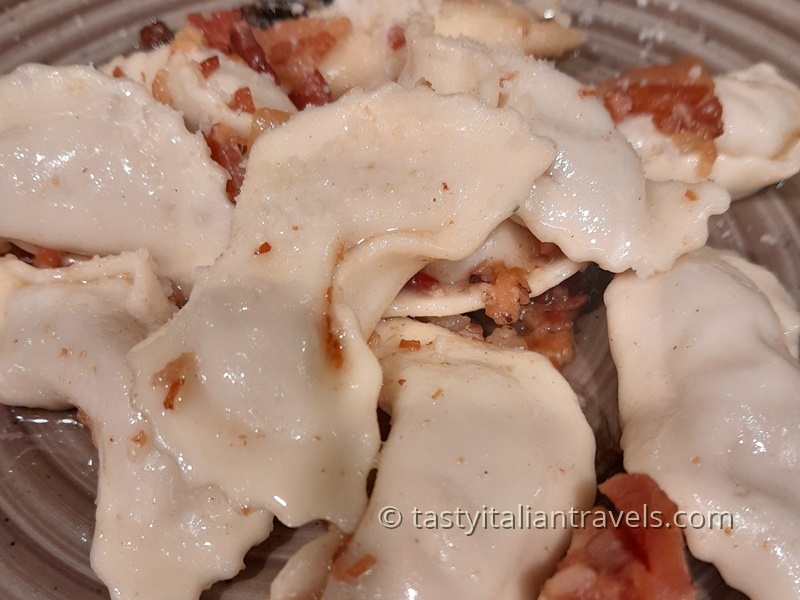
Our recent visit to Bergamo, near Milan, proved that it deserves to be among best cities for food lovers. 👉 Take a look at how our visit to Bergamo went.
We loved wandering between Città Alta and Città Bassa, stopping in local trattorias and cafés to enjoy the atmosphere and, of course, the incredible regional cuisine.
One dish you shouldn’t miss is casoncelli alla bergamasca—delicate, candy-shaped pasta filled with meat and served with pancetta, sage, and butter.
For an authentic taste, try Trattoria Parietti or Da Mimmo.
Another local specialty worth trying is loanghìna, a long, thin sausage typical of the area, rolled up and secured with toothpicks before grilling to hold its shape—usually served with creamy polenta or tucked into a simple panino.
While exploring, we couldn’t ignore the bright yellow cakes in bakery windows.
These are polenta e osei, a sponge cake filled with chocolate-hazelnut cream, coated in marzipan, and topped with a tiny chocolate bird. A great version can be found at Nessi Pasticceria near the funicular.
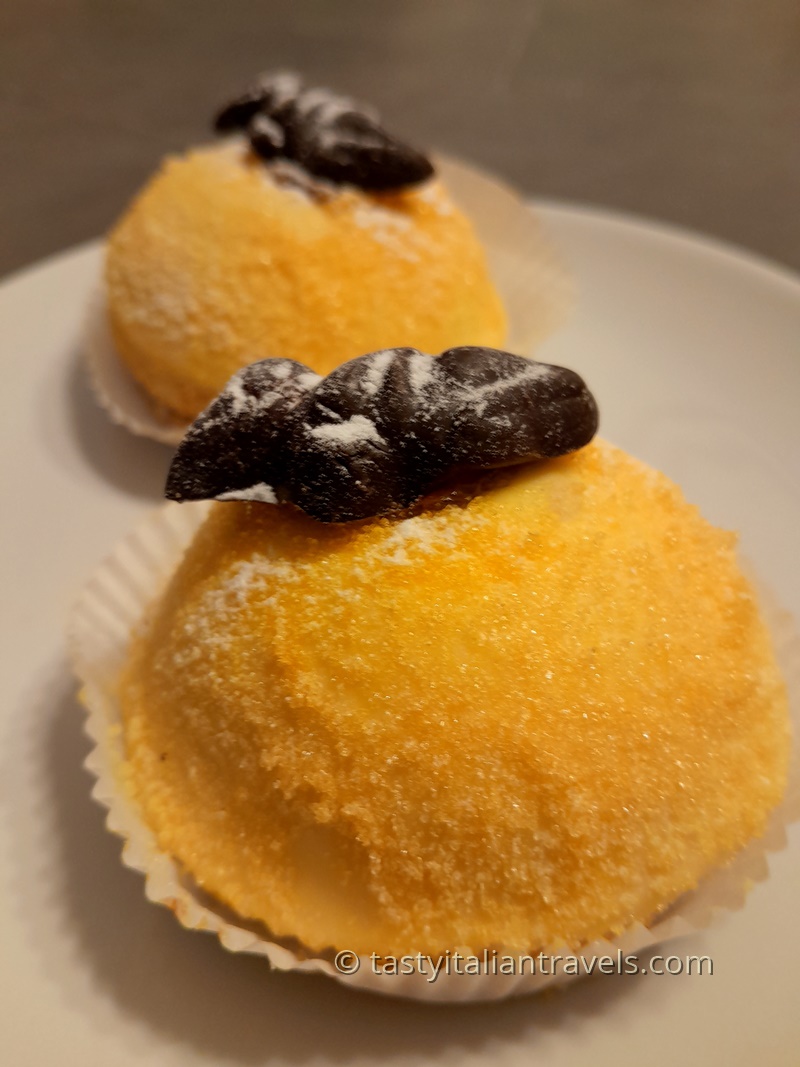 Polenta e osei, a traditional Bergamo dessert with a creamy center and signature yellow coating
Gelato is a must, especially stracciatella. We loved it at Gelateria La Romana, where the salted caramel with pecans is also worth trying.
For something quick, Forno Liento serves delicious warm panzerotti, while Mòrso Pizzeria Bergamo is perfect for affordable, tasty pizza and takeaway.
We also enjoyed Sweet Irene, a cosy café with great vegan and gluten-free options.
For a proper meal, Antica Trattoria La Colombina in the upper town offers classic dishes in a welcoming setting, while La Scagna in the lower town stands out for generous portions and rich flavours—just book ahead.
Opening times may vary, so it’s best to check in advance and make a reservation if possible.
Bergamo truly surprised us—it’s not only beautiful, but also a fantastic destination for anyone who loves good food.
8. Naples: Home of Pizza, Fried Treats & Fresh Seafood
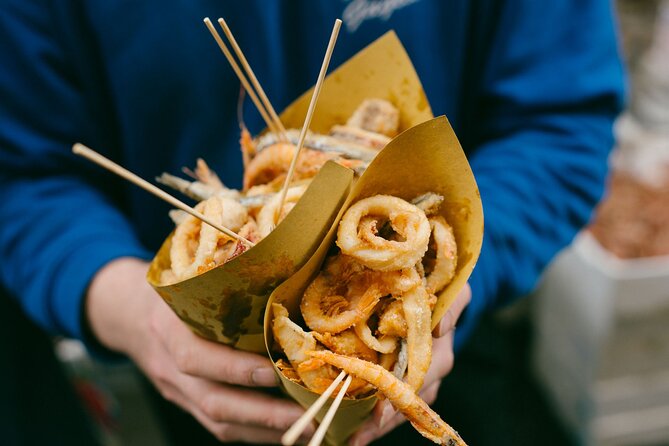
The Naples is famous for its pizza Napoletana made with San Marzano tomatoes creamy mozzarella and basil. But it's not all about the pizza in Naples, as it is popular for deep-fried food, starting from frittatine di pasta, fried calamari or sardines, fritters (made of the similar dough like pizza). Buy these delights from the stalls at Pignasecca market.
At seafood restaurants of the classy Chiaia waterfront district, you'll find another local speciality - spaghetti alle vongole (clams). Finish it off with limoncello made from lemons picked along the Amalfi Coast.
Popular Naples food are: Ziti alla Genovese, Sartù di riso, Pasta patate e provola, Cavaiuoli. Also some classic cheeses like Mozzarella di Bufala, Provola, Scamorza.
Take a guided food tour to try the best food of Naples.
9. Palermo: Street Food, Pasta & Sicilian Sweets
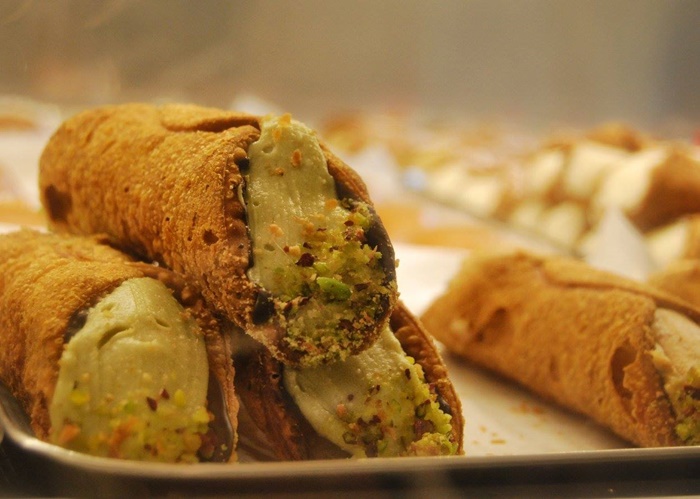
The island of Sicily, and particularly its capital Palermo, gives you an experience of street food like no other Italian city. Head to the lively Kalsa quarter, where you can watch fish, prawns and calamari being grilled on giant barbecues.
Plus, here you can try Sicilian fried snacks, such as arancini (fried risotto balls), panelle (chickpea flour fritters) and potato croquettes. At Palermo, visit the Mercato del Capo, food market that takes you to the heart of Sicilian food. Here you can try pasta con sarde - spaghetti with sardines and fennel.
Sicilian caponata is a tasty salad or relish made of eggplant with onions, celery, and tomatoes and augmented with tangy olives and capers.
Can I add real Sicilian granita with homemade panna to this list. With a fresh baked brioche. I’ve tried so many versions throughout the north and somehow it’s never quite the same as getting it in Sicily.
10. Siena: A medieval food capital in the Tuscan Hills
High in the rolling Tuscan hills, Siena is one of Italy’s most rewarding destinations for food lovers.
This beautifully preserved medieval city is famous not only for its Gothic streets and historic piazzas, but also for a cuisine deeply connected to the surrounding countryside.
Local restaurants celebrate seasonal ingredients, traditional recipes, and the slow rhythms of Tuscan cooking.
Menus across Siena are filled with rich regional specialties such as wild boar ragù, fragrant small-batch olive oils, earthy Porcini mushrooms, and handmade pastas.
You’ll find ribbon-shaped pappardelle served with slow-cooked hare, extra-thick pici pasta coated in rich garlic or meat sauces, and rustic soups made from bread, beans, and garden vegetables.
One of the city’s signature comfort dishes is Scottiglia — a hearty stew of mixed slow-cooked meats simmered in tomato, wine, and aromatic herbs.
Dessert is equally memorable. Siena is renowned for Ricciarelli, soft almond cookies dusted with sugar, and Panforte, an ancient Tuscan sweet made with honey, dried fruits, nuts, spices, and black pepper. Many local trattorias and family-run restaurants are proud supporters of the Slow Food movement, emphasizing locally sourced ingredients and traditional preparation methods.
In Siena, dining is never rushed. Meals are meant to be shared, savored, and experienced — making the city one of the very best food destinations in Italy.
11. Genoa & Cinque Terre: Ligurian Seafood, Pesto & More
We also have to mention Genoa as one of the best food cities in Italy. Pesto sauce, that we adore, comes from this city, as does focaccia — two edible treasures we absolutely adore.
Throughout the streets of the city’s Centro Storico, there’s no shortage of tiny cafés where you can snack on focaccia or farinata, an oven-baked flatbread made with chickpea flour.
Genoa is also full of local trattorias serving authentic dishes such as trofie pasta with pesto or ravioli-like pansotti with walnut sauce (another local favourite). At the stalls of the vast Mercato Orientale, you’ll find some of the best Ligurian olives, fresh pasta, meats and much more.
Nearby, the Cinque Terre — a picturesque string of seaside villages linked by leafy cliff-top trails — is hugely popular with visitors to Italy. In Sestri, cobbled streets are lined with street-food vendors selling farinata, thin, crusty pizza and gelato that’s good enough to make you abandon the beach. Seasonal street markets offer local treats such as marmellate (preserves) made with figs, blueberries and citrus, as well as focaccia di Recco, filled with creamy crescenza or stracchino cheese.
12. Turin: Gianduia, chocolate & Piedmont flavours
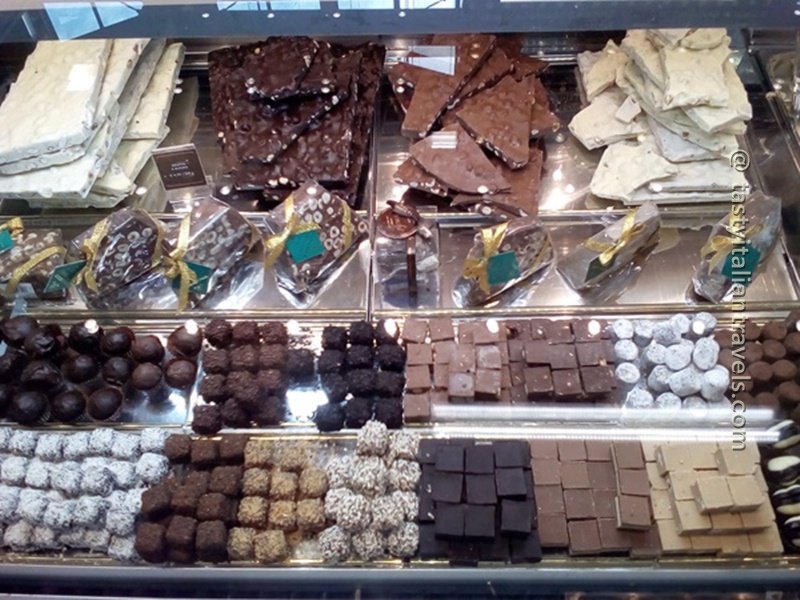
Turin is one of those cities that quietly wins over food lovers and never really lets them go.
Once the capital of the Duchy of Savoy, it has an elegant, regal feel—but its real charm lies in its food culture.
Turin is Italy’s chocolate capital, famous for its rich gianduiotto and smooth gianduia—a delicious blend of cocoa and Piedmont hazelnuts.
Home to historic chocolatiers like Caffarel, Baratti & Milano, and Peyrano, it’s a must-visit for chocolate lovers. Our favourite is Venchi, which you can also find in cities across Italy.
Historic cafés line the piazzas, many serving local classics like vermouth and zabaione.
A must-try is the bicerin—a layered drink of espresso, hot chocolate, and cream. From there, life slows down into long lunches, sweet breaks, and aperitivo in the evening.
Savory dishes are just as impressive, with Piedmont specialties like agnolotti del plin, vitello tonnato, rich pastas, slow-cooked meats, and seasonal white truffles.
The region also produces outstanding wines like Barolo and Barbaresco.
Best regions in Italy for food
Where to go in Italy for food?
There’s no single “best” region for food in Italy—each one has its own identity, ingredients, and traditions, shaped by geography and history.
Here are the ones that we love the most.
Emilia-Romagna
That said, Emilia-Romagna is often considered the heart of Italian cuisine, home to rich dishes like fresh pasta, aged cheeses, and cured meats.
Tuscany
Tuscany is one of Italy’s best food regions, known for simple, rustic dishes made with fresh local ingredients. Try hearty soups, handmade pasta, Tuscan steak, pecorino cheese, and excellent local wines.
Campania
Campania is one of Italy’s great food regions, famous for Neapolitan pizza, fresh seafood, mozzarella di bufala, and delicious pasta dishes. Don’t miss the region’s fresh, vibrant flavours and local wines.
Puglia
Puglia is a wonderful food region known for fresh seafood, orecchiette pasta, burrata, and simple dishes made with local ingredients. Don’t miss the region’s excellent olive oil, vegetables, and wines.
Piedmont
Piedmont is a top food region, famous for truffles, rich pasta dishes, hazelnuts, and excellent wines. Try local specialties like tajarin pasta and bagna càuda.
In reality, the “best” region is the one you’re eating in—because Italy’s food culture is deeply local, and every area has something unforgettable to offer.
More from Tasty Italian Travels
Within this webpage there are some affiliate links for products and services. For more details click here.
Welcome to Tasty Italian Travels
A little corner for Italy lovers, sharing our travels, favourite places, food finds, and moments that keep us coming back
What’s buzzing in Italy
-
Uffizi Reviews: What We Loved + Guide for Visiting (2026)
Sep 14, 26 04:46 AM
 Planning a visit to the Uffizi Gallery? Read our honest Uffizi reviews, what we loved, and must-know tips for visiting this world-famous Florence museum.
 -
One Day in Milan (2026): What to See, Do & Eat
Sep 14, 26 04:29 AM
 Only have one day in Milan? Discover the must-see attractions, best shopping options, and local dining recommendations to make the most of your 24 hours in the city.
 -
What to See in Rome in One Day: The Ultimate Itinerary, Tours & Tips
Sep 14, 26 04:27 AM
Discover what to see in Rome in one day with this first-time visitor itinerary covering the Colosseum, Roman Forum, Trevi Fountain, Pantheon, Piazza Navona and more. -
Bari to Monopoli 2026: Train & Transfer Options
Aug 15, 26 02:48 AM
Our Bari to Monopoli and back experience from last year. The train was the best and easiest way to travel, with beautiful coastal views along the way. -
Our Guide to Where to Stay in Rome
Aug 07, 26 02:22 PM
Not sure where to stay in Rome? We share our favorite areas and personal tips, from the Colosseum and Pantheon to the Vatican Museums and Trastevere. -
LivTours Rome Golf Cart Tour Review (2026)
Aug 02, 26 06:07 AM
Read our LivTours Golf Cart Tour in Rome review (2026). Find out if this guided tour is worth the price, what to expect, and our honest experience. -
24 Best Italy Food Tour Experiences (By City) - 2026 Guide 🍕
Jul 09, 26 07:19 AM
 Discover the best Italy food tours for 2026 — from Florence and Rome to Bologna and beyond. Experience authentic Italian cuisine, meet local guides, and book your perfect Italian food tour adventure t…
 -
6 Best Food Tours in Rome for 2026 - Our Top Picks 🍕
Apr 13, 26 05:42 AM
 Looking for the best food tours in Rome to take in 2026? Read our freshly updated reviews of Rome food tours we’ve tried and loved.




Note!
© Tastyitaliantravels.com.
All rights reserved.
All images and content on this website are copyright protected. Please do not use our images and text without our permission.
Thank you!